Your history. Your inbox.
7 uniquely curated newsletters to choose from.


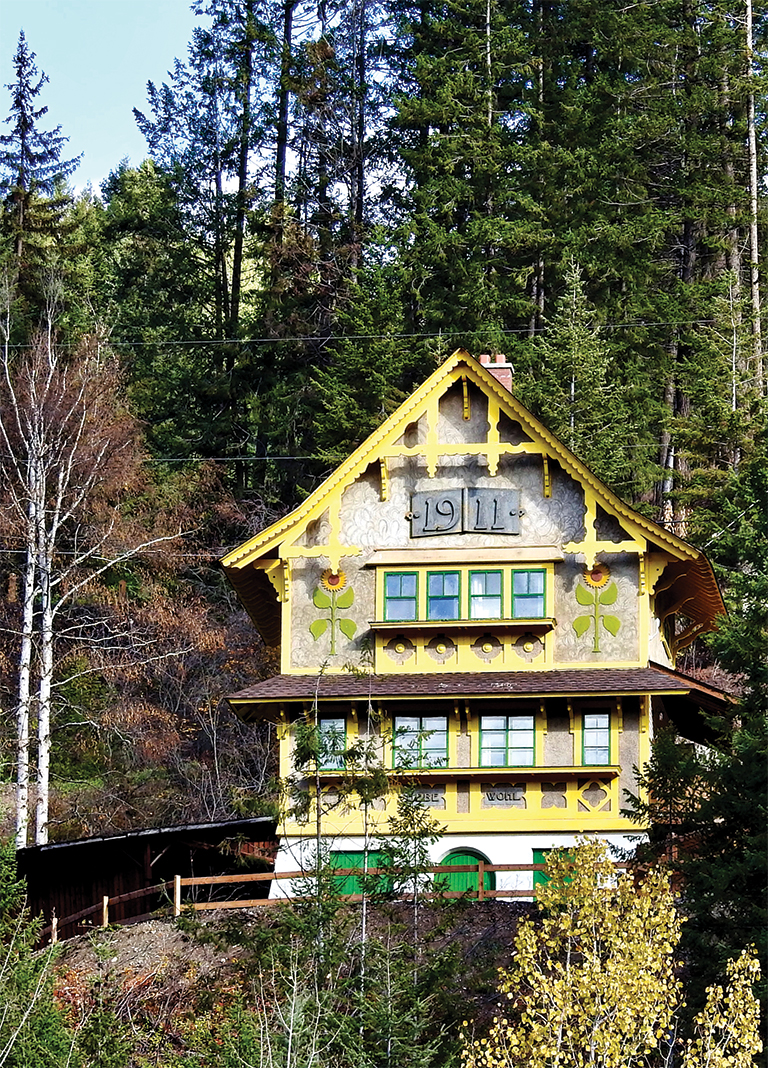
Not far from where freight trains trundle through Golden, B.C., six candy-coloured chalets cling to a hill above the Trans-Canada Highway. One red beauty with wraparound decks seems vaguely pagoda-like, while others with pointier roofs and white decorative touches give off gingerbread house vibes.
Built more than a century ago for Swiss guides recruited by the Canadian Pacific Railway (CP), the chalets recently faced an uncertain future when the property went up for sale in an area with no heritage protections. After landing on the National Trust for Canada’s Endangered Places List and surviving a failed crowdfunding campaign, this historic “village” was saved by a developer, preserving an important link to the birth of mountaineering in the Canadian Rockies.
“The whole community is pretty invested in the Swiss village and the houses because they’re a unique part of our history,” says Brittany Newman, the executive director of the Golden Museum and Archives.
That history has its origins with the arrival of William Green and Henry Swanzy in 1888. The mountaineering cousins from Ireland,both reverends, had arrived to climb the Selkirk Mountains while they stayed at one of CP’s early luxury hotels, Glacier House.
“Before the cousins disembarked at Glacier House, there was no record of a tourist ever entering the rugged landscape beyond the toe of the Illecillewaet Glacier,” explains an interpretive sign by Parks Canada at the Rogers Pass Centre, 80 kilometres west of Glacier House. “In fact, no one was known to have ever climbed a mountain in Western Canada solely for sport.

With 7 uniquely curated newsletters to choose from, we have something for everyone.
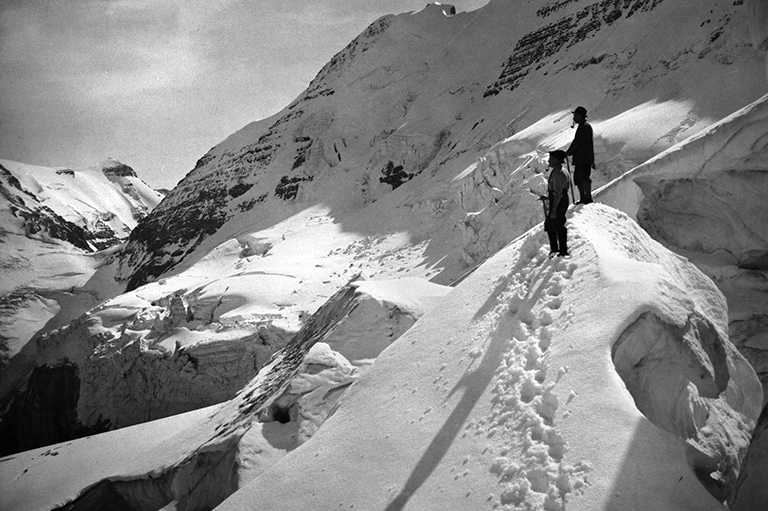
”The idea of mountaineering took off with Green’s 1890 book, Among the Selkirk Glaciers. But just six years later, American lawyer Philip S. Abbot died on Mount Lefroy on the B.C.-Alberta border in what was North America’s first recorded mountaineering death. Wanting tourists to see what was touted as “50 Switzerlands in one,” CP quickly recruited Swiss experts to guide and teach safe climbing techniques.
Between 1899 and 1954, CP hired about 35 Swiss guides. “It was a time of daring first ascents on unnamed summits and a major shift in public thinking about mountains —these jagged peaks were no longer obstacles for travel but playgrounds for alpine recreation,” recounts Parks Canada’s signage. The certified guides stayed from spring through fall, until the railway decided to build a permanent “village” of family homes on a hill by the train tracks just north of the burgeoning community of Golden. The Calgary architects, George S. Rees and James L. Wilson, who were hired to design the Swiss homes had never actually seen one, so they didn’t get the details quite right.
Built by CP engineers on a 20-hectare hillside between 1910 and 1912, the first six houses were poorly insulated. Those aboard passing trains admired Edelweiss Village —named for the alpine flower that serves as Switzerland’s unofficial national symbol — but the families staying there were miserable and had to trudge nearly two kilometres into town for supplies. They soon abandoned the homes and moved into Golden.
Of the original plan to build 20 chalets, only six were completed — and, until recently, remained owned by Swiss-guide descendants — but their future became precarious when the property went up for sale in 2021. The village is steps outside Golden in a rural district with no heritage bylaws, so the Swiss Edelweiss Village Foundation — a group of preservationists that includes Swiss Canadian historian Ilona Spaar and the Swiss Canadian Chamber of Commerce — sounded the alarm.
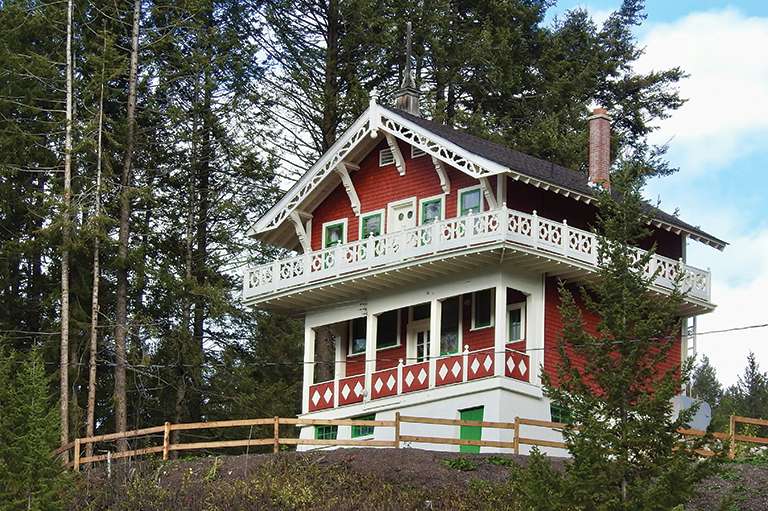
Edelweiss Village made the National Trust Endangered Places List in 2022.The trust called the village “one of the strongest remaining links to the golden age of Western Canadian mountaineering and its cross-cultural, Swiss-Canadian heritage.” When its crowdfunding attempt for a heritage tourism site failed, it worked with potential buyers to save it from the wrecking ball.
Montayne Capital Corp., a newly formed company led by Canmore environmental lawyer Davin MacIntosh and three other Alberta co-founders, snapped up the property in 2023. Inspired by a Swiss foundation that creates tourism rentals from restored abandoned historical buildings, they rebranded it as Edelweiss Village + Resort. The chalets — named for Rudolph Aemmer, Edward and Walter Feuz, Ernest Feuz and both Christian Haesler Jr. and Sr., plus the Heimann sisters — started welcoming guests in the fall of 2023 as Montayne continues to tackle the rest of the property.
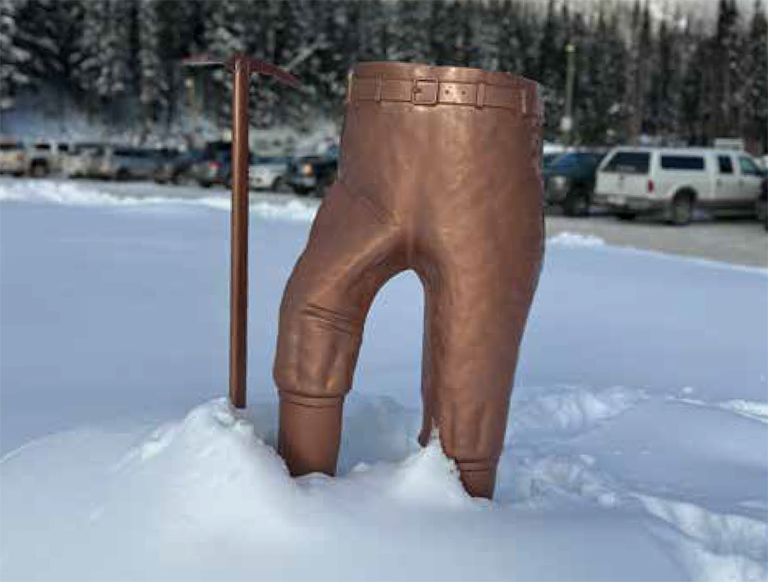
You can find more village history in downtown Golden. Look for the mural on the side of the 407 Boutique (Golden Dollar Store) that honours the Swiss guides and features a chalet. To see what’s left of Glacier House, head to Glacier’s Illecillewaet Campground to view foundation stones and a historical marker featuring a plaque and vintage photos. While you’re in the area, don’t miss Rob Buchanan’s interactive Breeches of Miss Conduct sculpture outside the Rogers Pass Centre that honours Georgia Engelhard. Swiss guides helped her become the first woman to climb many local peaks, all while defying norms and wearing breeches.
Advertisement
“Pants are made for men and not for women,” reads a 1920 Banff Crag & Canyon newspaper quote republished on a nearby interpretive sign. “Women are made for men and not for pants.”
Shake your head at that as you stand behind the oversized copper-coloured-steel mountaineering pants bolted to a rock and grip the replica ice-climbing axe for a photo, and remember the trailblazers — men and women, Swiss and otherwise — who helped forge our mountain culture.
Images: This iconic red chalet was home to Edward Feuz, one of Canada’s most accomplished mountain guides
Swiss guides Edward Feuz and Rudolf Aemmer were among the mountaineers who helped put Canada’s peaks on the map
GETTING THERE: A year-round mountain destination, Golden is a 280-kilometre drive west from Calgary International Airport through the Rockies, passing Banff, Alta., along the way.
STAY: If you’re not booked at Edelweiss Village + Resort, check out Rooms at River-edge in downtown Golden; its five ground-level rooms, all with king-size beds, have riverfront patios.
EAT AND DRINK: Browse the shelves at Four Points Books before heading to Bacchus Cafe for a coffee and a bite.If you’re looking for some-thing stronger, Whitetooth Mountain Bistro serves craft cocktails and B.C. wines.
EXPLORE: Take in the mountain views from the Golden Skybridge, Canada’s highest suspension bridge, then visit the Kicking Horse Pedestrian Bridge, which is Canada’s longest free-standing timber-frame bridge. Close to downtown, visit the Golden Museum and Archives to see vintage skis, climbing rope and snow goggles from past climbs. South of town, the World’s Largest Paddle and the Columbia Wetlands Outpost offer more opportunities to discover the region. An hour west, at the Rogers Pass Centre in Glacier National Park, Parks Canada highlights more of this history
We hope you’ll help us continue to share fascinating stories about Canada’s past by making a donation to Canada’s History Society today.
We highlight our nation’s diverse past by telling stories that illuminate the people, places, and events that unite us as Canadians, and by making those stories accessible to everyone through our free online content.
We are a registered charity that depends on contributions from readers like you to share inspiring and informative stories with students and citizens of all ages — award-winning stories written by Canada’s top historians, authors, journalists, and history enthusiasts.
Any amount helps, or better yet, start a monthly donation today. Your support makes all the difference. Thank you!
Advertisement