Your history. Your inbox.
7 uniquely curated newsletters to choose from.


So rarely does a provincial government pull off a win that one could forgive British Columbia Premier David Eby for the gratuitous deployment of Daft Punk’s “One More Time” as he announced in March that B.C. was changing its clocks “one more time — and then never again.”
Surrounded by a flock of children gambolling with toy clocks, Eby rattled off a list of complaints familiar to any disgruntled Canadian the morning after springing forward. “Kids get up at the same time even though the clocks changed,” said Eby, a father of three. “Dogs get up at the same time even though the clocks changed. What we see is more car accidents and people not feeling well, and [that has] a huge unnecessary impact on the lives of British Columbians.”
The rhetoric was familiar: B.C. had already voted in 2019 to switch to permanent daylight time eventually. At last, the day had arrived. British Columbians would spring forward and stay put. The twice-yearly time change was dead; long live daylight time!
The following month, Alberta Premier Danielle Smith introduced a bill to make daylight time permanent; Northwest Territories Premier R.J. Simpson followed suit. Soon after, Manitoba Premier Wab Kinew began the process that would lead the province to permanently adopt daylight time. The Yukon had already settled on permanent daylight time in 2020; more than half a century ago, before its current premier was even born, Saskatchewan had settled on permanent standard time. But this past spring, it seemed that, all at once, the western half of Canada had stopped time — or, at least, stopped on a time zone. These announcements were greeted with such a rousing reception that one wonders why we’d ever bothered to start winding the clocks forward and back to begin with.

With 7 uniquely curated newsletters to choose from, we have something for everyone.
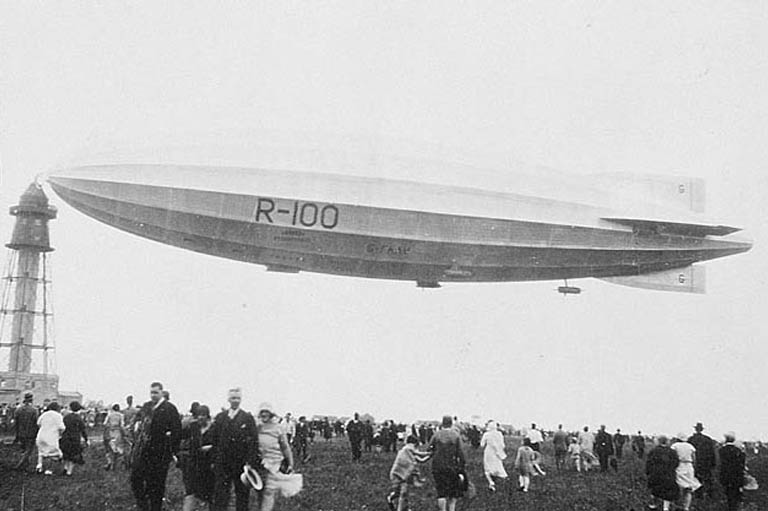
In the beginning, there were no time zones at all. After watches were invented in the 16th century, wearers spent around 400 years setting them by the sun. Local time was truly local, synchronized to your neighbours; it hardly mattered what someone in the next town or province was doing. Then, in 1862, a Scottish-Canadian engineer named Sandford Fleming proposed the idea of a transcontinental railway connecting Canada’s Atlantic and Pacific coasts. Soon, he detected a problem: trains required schedules. The entire country of Scotland, where Fleming was born, is only a little larger than New Brunswick; there, communities connected by rail could reasonably be expected to synchronize their clocks. For a country the size of Canada, the matter of time was more complex.
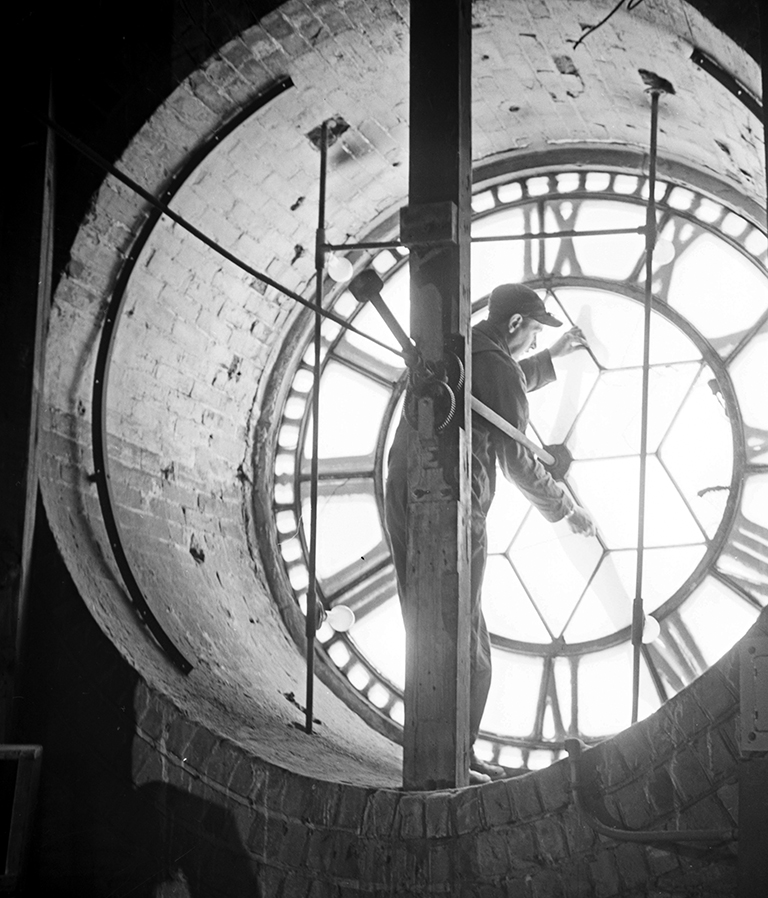
By 1885, when Fleming watched the Last Spike of the Canadian Pacific Railway hammered in at Craigellachie, B.C., he had already devised a solution and convinced the world to implement it. (The modern mind, inured to the glacial pace of contemporary government bureaucracy, simply cannot comprehend such efficiency.) Fleming proposed dividing the world into 24 equal time zones, each 15 degrees of longitude representing one hour. Greenwich mean time — already adopted in Britain in 1847 as “railway time” — would start the clock at midnight. Fleming’s system was adopted and standardized in 1884. The clock in Canada was no longer ruled by the sun; its new master was the time zone.
The new system wasn’t without flaws. Michael Antle, a professor of psychology at the University of Calgary who studies circadian rhythms, says time zones are a great system — when they line up with the sun. Ideally, he says, our clocks would strike 12 within half an hour of solar noon, when the sun reaches its apex overhead. “Some cities are pretty close,” he says, like Toronto and Montreal. St. John’s, N.L., is offset by half an hour for good reason: according to Antle, the city is almost perfectly aligned with the sun.
Elsewhere, the sun was out of sync. When one looks at Pacific time — centred on 120 degrees west longitude — both Edmonton and Calgary fall within it. But time zones were adjusted to follow borders, rather than the perfect geometry of the globe. So, when the railway began running, Calgary citizens found the schedule was set to mountain time, an hour ahead. At first, they resisted. On Jan. 30, 1884, in a column titled “The Boom,” the Calgary Herald wrote that Fort Calgary had agreed to fire a cannon at noon Pacific time, asserting a kind of temporal authority over the interloping time zone. But by May, the bill for gunpowder and flannel had reached $17.40, and the community surrendered to the rail schedule and mountain time. Ever since, says Antle, most Albertans have been waking up and going to bed an hour later than they would if they were following the sun.
And they’re not the only ones. Saskatchewan, which permanently adopted central standard time in 1966, is an hour ahead of its geographic position. “If you look at a map,” says Antle, “105 degrees west — the dead centre of mountain time — is Moose Jaw, Sask.”
Here’s why that matters. Time changes are as disruptive as we think on that second Sunday in March, when we drag ourselves out of bed an hour earlier than we’d like. In 1996, Stanley Coren — a University of British Columbia psychology professor best known for his research into dog behaviour and as the author of such titles as Born to Bark and Do Dogs Dream? — published a landmark study showing a spike in traffic accidents following the time change in the spring.
Coren, Antle explains, prompted scientists to consider the time change “from a circadian point of view.” There were already studies looking at melatonin, a hormone released in the evening to promote sleep, that provided insight. “It takes about a day for the body to adjust for every time zone you cross,” says Antle. “But melatonin follows the sun, so it never adjusts to a time change.” Sufferers of “social jet lag” — a term coined by German scientist Till Roenneberg to describe people whose lives are out of sync with their biological clocks — face elevated risks of developing diabetes, heart disease, depression, Alzheimer’s and cancer.
The risk of car accidents is an acute harm: harrowing but short-lived. The elevated risk of disease, on the other hand, is chronic; it persists long after you catch up on that one hour of missed sleep, for as long as your biological clock is out of sync with the sun. For decades, says Antle, scientists have been warning about the risks of time changes — and, finally, people are listening. “We’ve convinced the world to stop changing clocks,” he says, “but we forgot to tell people where to stop them.”
Nearly as soon as time zones were established, enterprising minds began to envision their improvement. In 1907, a British builder named William Willett lamented that “the clear bright light of early mornings, during spring and summer months, is so seldom seen or used.” Willett proposed a complex scheme — turning back the clock 20 minutes each Sunday in April, then rolling it forward 20 minutes each Sunday in September — to yield longer evenings between May and August. Instead, in 1908, Port Arthur and Fort William — two Ontario towns that would later become part of Thunder Bay — voted to spring forward an hour for the summer months, initiating the world’s first trial of daylight saving time. (No matter how much more smoothly it rolls off the tongue, it’s not daylight savings time.)
The spirit of experimentation continued for a decade in cities and businesses across Canada. In May 1910, the British American Bank Note Company — an Ottawa printer — shifted the workday back one hour, with positive results: an article in the Ottawa Citizen noted employees were more punctual in the mornings, and “the prospect of getting away earlier in the afternoon seems to stimulate everybody to perform their duties with more alacrity.” But criticism persisted. A 1914 column in the Sault Star decried it as a doomed import from America, “that land of political experiments.
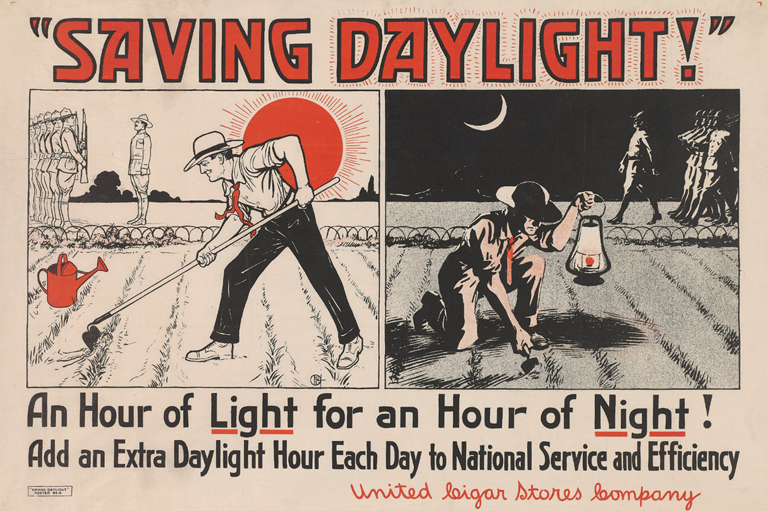
“It is magnificent in the abstract,” the column proclaimed. “It has only one failing in practice — it won’t work.” But in 1918, the federal government implemented daylight time across Canada as a wartime measure to conserve energy costs and increase productivity. Originally spanning roughly half of the year, from April through late October, since 2007 it has begun in March and ended in early November, allegedly at the behest of candy companies who benefitted from later Halloween sunsets, which gave kids more time to trick-or-treat before bed.
Most people enjoy the extra hour of daylight in summer, but you can have too much of a good thing. In 1988, Newfoundland tried double daylight time, moving the clocks forward two hours. “The whole thing is a farce,” Hank Shouse, then mayor of Happy Valley-Goose Bay, complained. The unpopular experiment was abandoned after one year.
Now, more than a century after widespread adoption, the economic benefits of daylight time have faded. While it once conserved artificial light — in 1918, a significant portion of energy costs — recent analyses have found negligible savings. The acute harms that follow the time change, including increased risks of strokes, heart attacks and car accidents, have remained.
We dodge those acute harms when we stop changing the clocks, but what worries Antle and other experts is that the chronic harms will persist — permanently.
In 2019, prior to passing a bill to enable permanent daylight time, British Columbia surveyed its citizens to ask if they would prefer it to changing the clocks twice a year; 93 per cent said yes. But despite consistent warnings from experts of the long-term risks of misalignment with the sun, there was no survey option for permanent standard time. (Though, initially, B.C. proposed coordinating the permanent shift with Washington, Oregon and California to the south, the relationship between nations has since declined, to put it mildly.)
Antle’s explanation? Branding. “Daylight time sounds special, it sounds good,” he says. “People like the idea of sunshine in the evening, and they’re conflating daylight with seasons. What they really like is summer.”
But summer always ends — and, so far, where it’s been tried, so does permanent daylight time. The U.K. implemented permanent daylight time in 1968 before abolishing it in 1971, after the late winter sunrises and dangerously dark mornings prompted backlash. More recently, Russia adopted it in 2011, abandoning it three years later, after a spike in mental health issues among youth. The short history of regulating time is one of tinkering and folly, a tireless and fickle exercise in trying to squeeze the most value from our 24 hours each day. How long permanent daylight time will last in Canada is, so far, a question without an answer. Only time will tell.
We hope you’ll help us continue to share fascinating stories about Canada’s past by making a donation to Canada’s History Society today.
We highlight our nation’s diverse past by telling stories that illuminate the people, places, and events that unite us as Canadians, and by making those stories accessible to everyone through our free online content.
We are a registered charity that depends on contributions from readers like you to share inspiring and informative stories with students and citizens of all ages — award-winning stories written by Canada’s top historians, authors, journalists, and history enthusiasts.
Any amount helps, or better yet, start a monthly donation today. Your support makes all the difference. Thank you!
Advertisement