Your history. Your inbox.
7 uniquely curated newsletters to choose from.


Dear Ann,
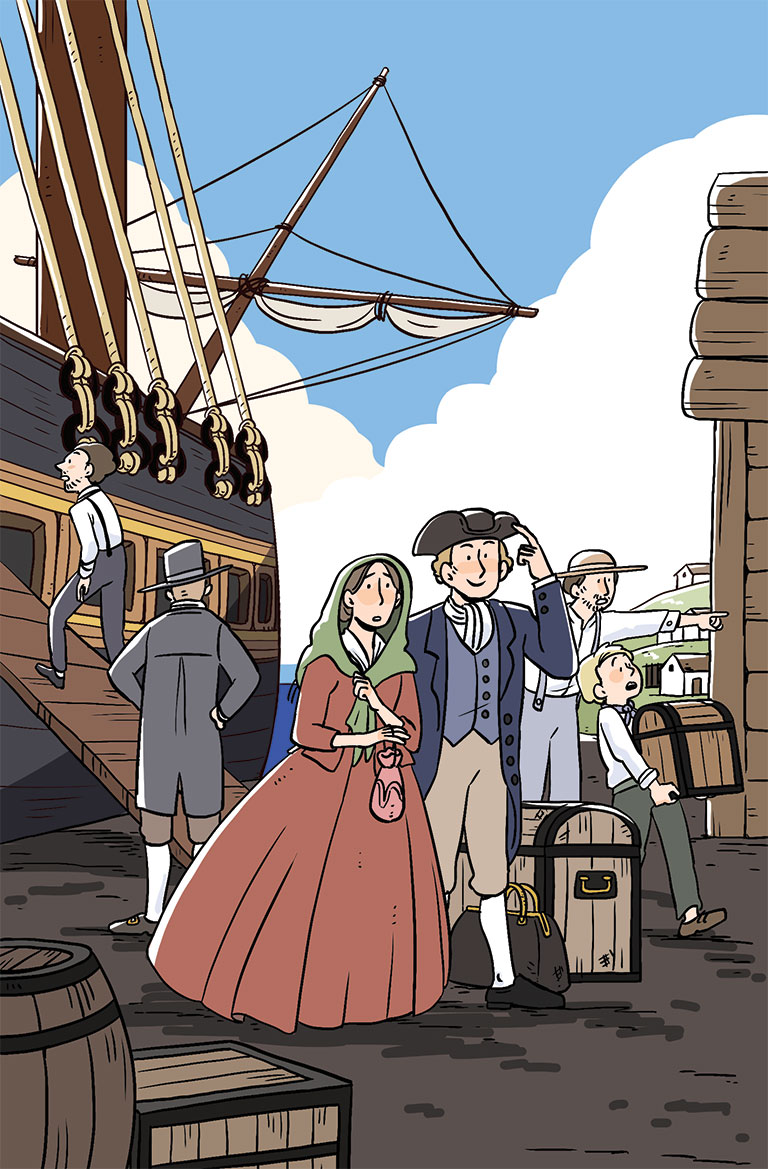
I write briefly and in haste to inform you that Lavinah and I have arrived after our journey aboard the Cyrus. How happy we were to leave New York behind for British territory, even though it meant we would never see our little farm again. I do not criticize your choice to stay in the United States — that name is still so strange to me! — but, dear sister, it saddens me that we are now separated by a border. This town has perhaps 400 souls with few graceful buildings as yet. I am sure we will soon be comfortable in a house we will build on the lot we expect to receive.Before long we shall be farmers again!
-William
Dear Will,
We were glad to hear that you are safe and settled. How distant you seem in that colony of your beloved Britain, with us here in a wholly new and independent country. The talk of the future is very exciting, but our daily lives continue much the same, with your growing nieces and nephews occupying most of my time. I know we have our differences, but I truly wish you and Lavinah well in your new home.
-Ann
Dear Ann,
Forgive my long silence. The winter was harsh, with many days that caused us to question our choice. As the damp wind blew off the ocean and snow piled up all around, I began to wonder whether we would survive. We were sustained by the knowledge that we could not have stayed where so many hated us for our loyalty to Great Britain.
After being too miserable to write for many months, however, I now put pen to paper to say that we are much encouraged. I hope to plant our first crops this summer, and I have plans to buy more property while prices are still cheap. As more settlers flock to Parr Town, no doubt land will quickly increase in value.
Perhaps you and John would consider moving your family here to be near us? You would see why the St. John River is known by some as the Wolastoq or “beautiful river.”Land in its valley is fertile. We enjoy a calm, ordered British way of life, unlike the rough chaos of your republic. No doubt you are already seeing the error of its ways.
-William

With 7 uniquely curated newsletters to choose from, we have something for everyone.
My dearest Ann,
I worry that you have not written back because my last letter has angered you. In my enthusiasm for our new life, I did not mean to be thoughtless. Please accept my humble apology. What is past is past, and I shall say no more about your country or your choice. You will always be my beloved sister. As I expected, life changes and improves rapidly in our new home. You will notice that although we have not moved, I write you from a whole new place! The flood of Loyalists like us has prompted the creation of New Brunswick, a separate colony from Nova Scotia. Many of us are pleased to no longer answer to faraway Halifax. I have purchased a cart and horse to transport newcomers and their belongings and carry goods for merchants. There is much here to keep us busy. Do write me back when you are able.
-William
Dearest William,
Please do not trouble yourself. I have not been angry, but busy tending to our newest family member. Little Isaac was born in May. Our growing brood is delightful but a great deal of work. I sometimes wonder how Mama managed all seven of us! I am training the older children to look after some tasks, which is often a great deal more work than doing them myself. With the garden, preserving, washing and so much more, the days fly by! I am very pleased to hear of your situation. A whole new colony for the Loyalists is quite an achievement!
-Ann
Dear Ann,
How happy I was to receive your letter from last October! It was delayed in arriving
by the onset of winter, but I have read and reread it many times.
You will note that our town has a new name, Saint John. It combines our former
Parrtown and the neighbouring settlement of Carleton. I understand the new name
derives from the river, which in turn was named by Samuel de Champlain for his
arrival on the feast day of St. John the Baptist nearly two centuries ago. I must admit
that I was partial to the names of British leaders for our towns, but we spell it out as
“Saint John” in the most English way possible.
Just last week, I received another grant of land, and I would not be surprised
if another were offered later this year. May I impart to you an idea that has much
occupied my mind of late? I am thinking of building an inn on land near the Lily Lake.
Imagine your brother William as an innkeeper! Lavinah sends her love, as I do mine.
-William
Kayak: Canada’s History Magazine for Kids — 3 digital issues per year for as low as $13.99. Tariff-exempt!
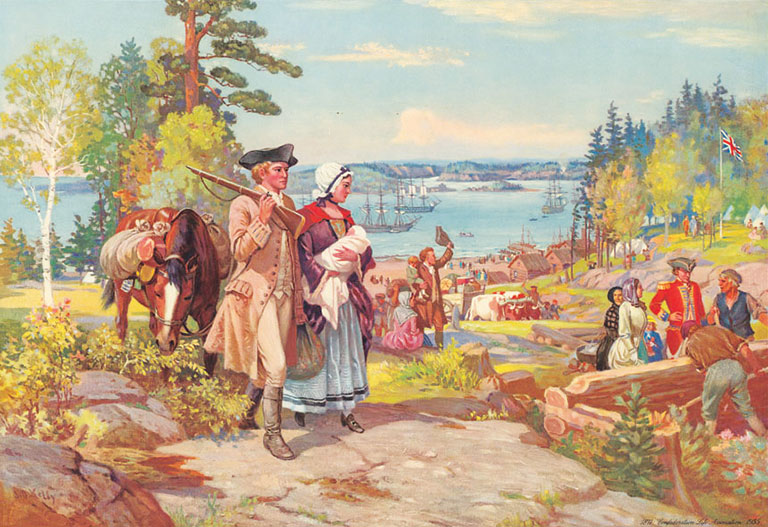
William and Lavinah Burtis were real Loyalists who fled to what was then the colony of Nova Scotia after the American Revolutionary War.
From 1783 to 1785, about 15,000 Loyalists arrived, quadrupling the population. Their numbers included about 2,000 Indigenous people who had fought for Britain, and at least 3,500 enslaved and free Black people. The land Britain gave people like William and Lavinah was the traditional territory of the Wolastoqey and Mi’kmaq. William had five sisters who stayed in the U.S., although we don’t know for sure if one was named Ann.
We imagined these letters, but the things William mentions in them are real: his arrival, the creation of New Brunswick and Saint John, his plans to buy land and sell it for much more money (he did) and to build a tavern (he did), and even his cart and horse. You can even see William Burtis’s grave in the Old Burying Ground in Saint John.
Advertisement