Your history. Your inbox.
7 uniquely curated newsletters to choose from.


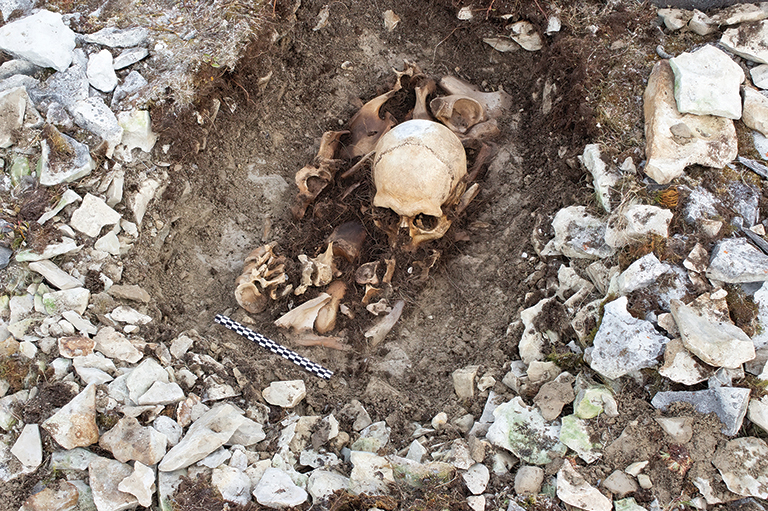
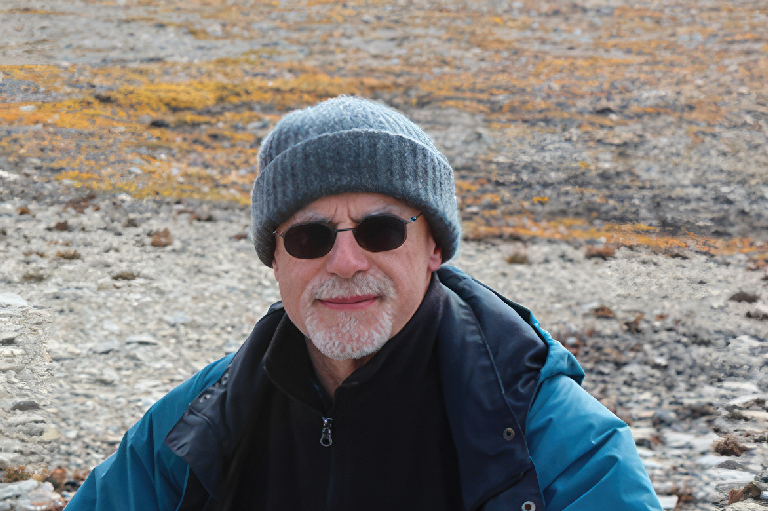
Franklin and his crew of 129 men set out aboard HMS Erebus and HMS Terror to find the Northwest Passage, but both ships became trapped in Arctic ice and all 129 men eventually died. Archaeologist Douglas Stenton, the project’s principal investigator, spoke with Canada’s History assistant editor Kamila Costello about the latest discoveries and what these identifications reveal about the Franklin expedition’s final years.
We had to establish two datasets. The first was the archaeology dataset from the human remains we recovered; the second was from descendants. Since 2017, more than 130 people from seven countries have contacted us. We compare mitochondrial DNA and Y-chromosome markers with descendants who can trace an unbroken maternal or paternal line to a member of the expedition. We couldn’t do this work without them.
When Capt. Francis Leopold McClintock found the skeleton in 1859, he also found Harry Peglar’s seaman’s certificate. But he described the man as being dressed as a steward, and Peglar had never been a steward. The historical narrative became that this was another sailor carrying Peglar’s papers home. That never completely added up to me. DNA showed a perfect match with Peglar’s family; this was Peglar, no question about it. We think the most plausible explanation is that he’d been reduced in rank before HMS Terror was deserted. That sort of upended the historical narrative shared for more than 100 years.
We know that when the ships were deserted in April 1848, there were 105 men still alive and the men we’ve identified were among them. That’s why we say they survived for almost three years after the expedition left England. Beyond that, we have very limited information. Every identification gives us another piece of evidence about what happened during those final months.
Inuit oral history has made a major contribution to our understanding of the Franklin expedition. Inuit weren’t simply informants; they were active participants in the search. They travelled with expeditions, identified important sites and shared knowledge that had been passed down through generations. As far as I’m concerned, explorers like Charles Francis Hall and Frederick Schwatka wouldn’t have succeeded without Inuit.
One of the interesting things is that five of the six men we’ve identified from two sites all came from HMS Erebus. That raises the question, where were the men from HMS Terror? Were the two crews travelling separately? We need much more information before making that claim, but the more identifications we make, the more light they may shed on how the retreat unfolded.
We’re going to continue working with descendants to identify more of these individuals. Apart from advancing the history, it provides a measure of closure for families. We’ve had some very nice emails thanking us for the work. We can say, “We found him. He died here.” It’s fitting that descendants are directly involved in identifying their ancestors.
This interview has been edited for length and clarity.
Advertisement