Your history. Your inbox.
7 uniquely curated newsletters to choose from.


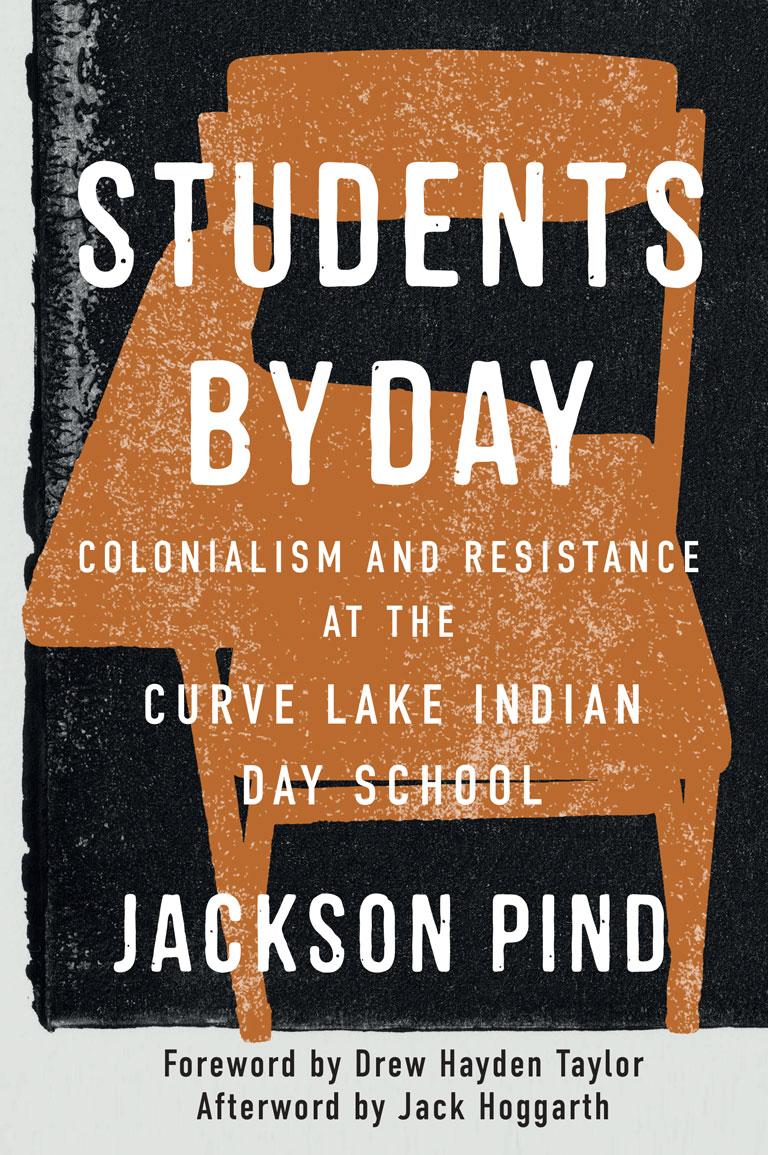
Students by Day: Colonialism and Resistance at the Curve Lake Indian Day School
by Jackson Pind
McGill-Queen’s University Press
256 pages, $29.95
While there’s a deep well of information available about the horrific Indian residential school system, the same can’t be said of day schools, which resembled the former in practice but didn’t house students.
That picture is changing, though. Students by Day by Jackson Pind is the first book to document the history of the Indian day school at Curve Lake First Nation, about 25 kilometres northeast of Peterborough, Ont. This history is rooted in the arrival of a missionary society called the New England Company, which established the reserve and Mud Lake Indian Day School (Curve Lake was once known as Mud Lake). The goal of this education was clear: to assimilate Indigenous children into the world of Christian settlers. This impact travelled far beyond the reserve, as the school “would become the foundation of the Indian day school system that would spread quickly across the rest of the country in the late nineteenth century,” writes the author.
From the outset in the 1830s, Mud Lake faced challenges attracting and retaining students. Teachers were often unqualified, negligent and abusive. Members of Curve Lake were forced to pay teachers’ salaries, cover renovation costs and supply school materials — all of which had to be approved by the Department of Indian Affairs.

With 7 uniquely curated newsletters to choose from, we have something for everyone.
Pind, an assistant professor of Indigenous methodologies at Trent University, writes in great detail about the community’s constant negotiations with the department, which were mediated through the band Chief. By weaving together archival evidence and interviews, Pind offers a nuanced narrative that highlights the complexities of personal and professional motives while keeping human lives at its centre.
The legacy of these schools is only beginning to be publicly acknowledged. It wasn’t until the decade-long Maclean et al. v. Canada lawsuit, which began in 2006, that the Canadian government formally recognized the harm suffered by the estimated 200,000 students who attended day schools. Yet, as Pind reminds us, records remain incomplete, and with 200 survivors passing away each year, key voices continue to be lost.
Ultimately, Students by Day provides a compelling narrative of Indigenous struggle and resilience, emphasizing an unwavering commitment to self-advocacy and rights.
Advertisement