Ziqi L.
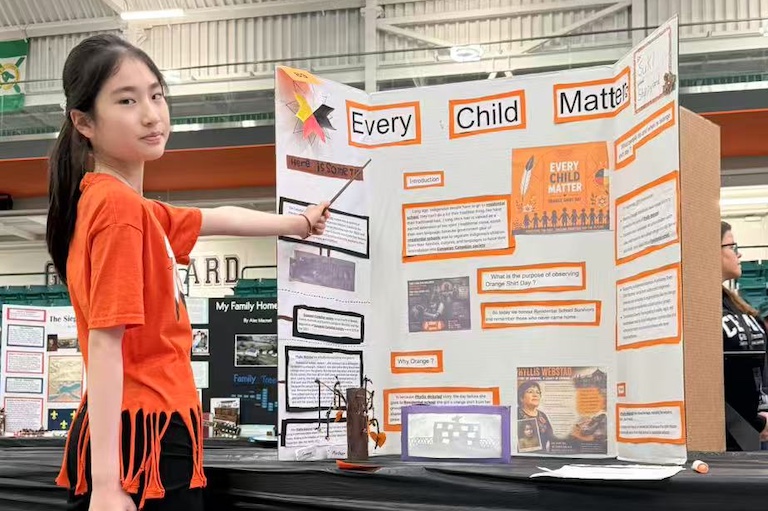
Every Child Matters
Ziqi L.
Cape Breton Victoria Regional Heritage Fair
Sydney, NS
Long ago, many Indigenous children in Canada were forced to go to residential schools. They had to leave their homes, families, and friends. At the schools, they were not allowed to speak their own language, wear traditional clothing, or practice their culture. If they did, they could be punished or abused. Many children were treated badly, and some never returned home. The government’s goal was to separate Indigenous children from their culture and force them to live like European Canadians.
One important person in my project is Phyllis Webstad. When she was six years old, her grandmother bought her a bright orange shirt for her first day at residential school. But when she arrived, the school took her shirt away and never gave it back. This made her feel like she did not matter. Later, she was able to return home and attend a different school.
My inquiry question was about why Orange Shirt Day is important today. I learned that people wear orange shirts to remember the children who went to residential schools and to show that every child matters. Learning about this history helps people understand the harm caused by residential schools and why respect, truth, and reconciliation are important.
What sources and evidence did you consult for your project? What different perspectives did they provide on your topic?
I used websites like Orange Shirt Day, Save the Children, Government of Canada - National Day of Truth and Reconciliation, and Wikipedia to learn about this topic.
What is the historical significance of your topic?
Residential schools are important in history because they hurt many Indigenous children and families. Indigenous children were forced to leave their homes and go to schools far away from their parents and communities. At the schools, they were not allowed to speak their own language, wear traditional clothes, or practice their culture. Many children were treated badly, and some children never came home.
The short-term effects were that children felt lonely, scared, and sad because they missed their families and culture. Families were also very upset because their children were taken away. The long-term effects are still happening today. Many survivors grew up feeling hurt inside, and some Indigenous languages and traditions were lost because children were not allowed to learn or use them.
A survivor named Phyllis Webstad shared her story about losing her orange shirt at residential school. Her story helped start Orange Shirt Day. Today, people wear orange shirts to remember the children who went to residential schools and to show that every child matters. Schools and communities now teach people about this history so everyone can learn from the past and help support healing and respect for Indigenous peoples.
Why did you choose this topic?
I chose this topic because I wanted to learn more about residential schools and how Indigenous children were treated unfairly. I also thought the story of Phyllis Webstad was very powerful and important to share.