
Sandra H.-S.
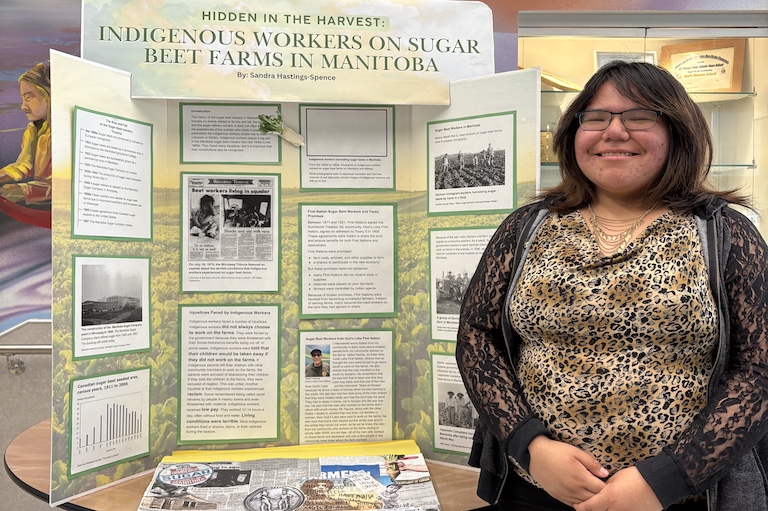
Hidden in the Harvest: Indigenous Workers on Sugar Beet Farms in Manitoba
Sandra H.-S.
Red River Heritage Fair
Winnipeg, MB
The history of the sugar beet industry in Manitoba often focuses on events related to its rise and fall, the farmers, and the sugar refineries. It does not tell about the experiences of the workers who made it possible, particularly the Indigenous workers whose role is often unknown or hidden.
Indigenous workers played a big part in the Manitoba sugar beet industry from the 1940s to the 1980s. During the Second World War, the imports of sugar were disrupted and Canada wanted farmers to grow more sugar beets. Sugar beets needed a lot of workers. Farmers used German prisoners of war and interned Japanese Canadians to work on the farms. As well, Indigenous men from northern First Nations in Manitoba were recruited to help out the war effort by working on the farms. I learned that even a few men from my community, God’s Lake First Nation, worked on the farms in southern Manitoba. After the Second World War, the German prisoners of war and Japanese Canadians were no longer forced to take part in working on the farms. This meant that more workers were needed. As a result, the government continued to recruit Indigenous workers for the farms. In some cases, they stopped paying social assistance or threatened to take away their children if they did work on the fields. The recruitment by Indian Affairs stopped in the mid-1970s and as a result, there were fewer Indigenous workers by the 1980s.
As seasonal labourers, Indigenous workers faced many injustices, from poor working conditions to racism. Although not many people know their stories, Indigenous workers played a big part in the Manitoba sugar beet industry from the 1940s to the 1980s. They faced many injustices, and it is important that their contributions also be recognized.
What sources and evidence did you consult for your project? What different perspectives did they provide on your topic?
It was easy to find sources online that explained about the rise of the sugar beet industry and about the Manitoba Sugar Company, but I was surprised to find out that there was not as much information about Indigenous workers even though they were a big part of the workforce on the farms for forty years. It was even hard to find photos of Indigenous workers on the beet fields during the 1940s and 1950s. While I found some articles about the topic, there wasn’t a lot of information and the perspective of First Nations peoples was often left out.
When I talked to some Elders in my community, I learned that some men travelled all the way to southern Manitoba to work on the farms near the end of the war. I would like to specifically thank Talbot Nazzie for aiding me with my research about the men from my community who worked on the sugar beet farms. Many people in my community, even Elders, didn’t even know about Indigenous workers on sugar beet farms.
A really important source of information was a 1975 article in the Winnipeg Tribune that exposed the unjust conditions that Indigenous beet workers faced. I learned about this article after reading a more recent CBC news article about beet farming in Manitoba. I found the original article on the University of Manitoba archives. This article shared more about the reality of the hardships that Indigenous workers faced in the 1970s. It was written from a non-Indigenous perspective, but it helped me learn about the conditions at that time. Only the more recent CBC article included experiences told by Indigenous workers.
Even though I spent a lot of time researching, I think there are still a lot more stories to be told and shared. I will continue to ask the Elders in my community if they know any stories about the men who worked on the farms.
What is the historical significance of your topic?
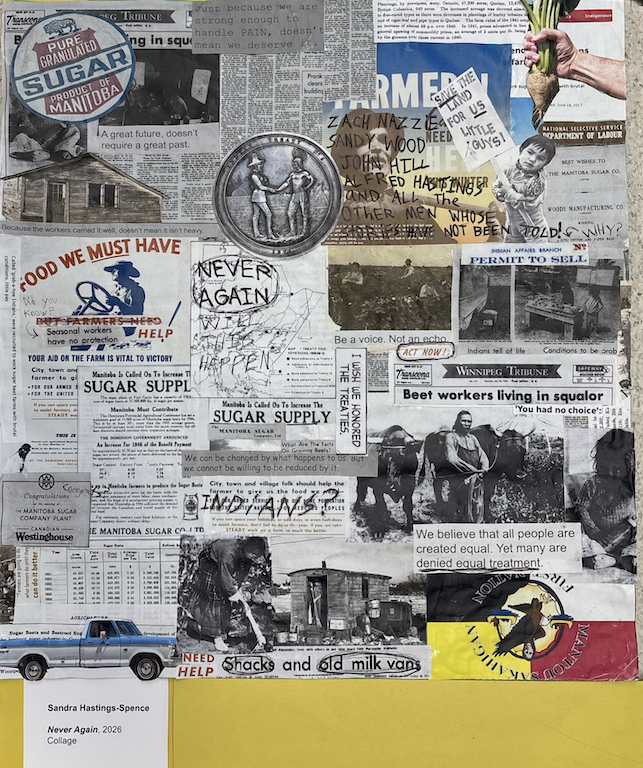
The sugar beet industry is historically significant because it was an important part of Manitoba’s economy during and after the Second World War. This industry needed workers to succeed and many Indigenous workers worked on sugar beet farms from the 1940s to the 1980s, but these contributions to the economic success of Manitoba were ignored and not recognized. Indigenous workers were sometimes forcibly recruited by the government and worked for low wages in poor conditions. They also faced discrimination.
This topic also shows the impact of broken treaty promises. Many First Nations did not receive the tools and support they were promised. In addition, reserves were frequently placed on land that was not suitable for farming. The Indian Act and Indian agents also restricted First Nations farmers. For example, they often needed permission from an Indian agent to sell the crops they grew, limiting their ability to succeed. If these treaty promises had been honoured, First Nations might have become successful farm owners. Instead, many were pushed into low-paying labour on farms and were excluded from sharing in the profits.
By teaching others about this topic, I hope that my project creates a historical impact by teaching more people about the contributions of Indigenous workers.
Why did you choose this topic?
During the start of my Heritage Fair project, I didn’t originally intend for it to be about the Indigenous workers on sugar beet farms in Manitoba. As a matter of fact, I hadn’t heard about this important piece of history beforehand. When I was interviewing an Elder for what was initially supposed to be my project about veterans that came from my community, I found out from an Elder, Sandra Ross, that her dad worked on farms during World War II and I started to research that topic. If I hadn’t spoken to her, I wouldn’t have even known about this history. She inspired this project and I feel so proud about the work that I did and the people that helped me along the way. I felt it was important to share this story because not many people know about this, even in my community, and I don’t want this piece of history to be overlooked.