
Makayla L.
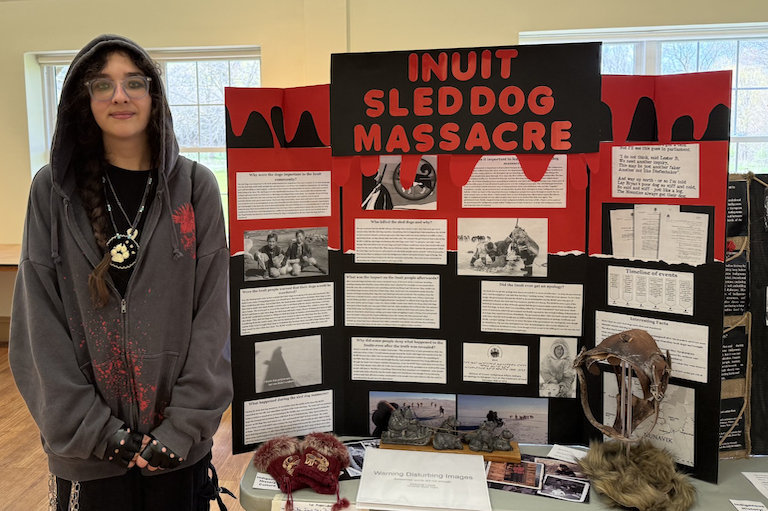
Inuit Dog Sled Massacre
Makayla L.
Thames Valley Regional Heritage Fair
London, ON
I chose the topic of the Inuit dog sled massacre for my project because I feel it is important, as a member of Oneida Six Nations, to research and focus on Canadian Indigenous issues—especially ones that are not taught about as much as they should be.
The Inuit, who were forced into settlements, believe the dog sled massacre was the government’s way of making them dependent on the government for their survival and allowing their culture to be taken away from Inuit communities.
The effects of the massacre can still be seen within those communities. To most Inuit people their dogs were like family; they were also used for transportation and hunting. During the massacre, the Canadian Inuit dog breed was almost wiped out. Luckily, today there are still families with dogs and sled teams, and the breed has made a return and is now on the conservation list. I did so much research that I had all of my why questions answered.
What sources and evidence did you consult for your project? What different perspectives did they provide on your topic?
Many of the sources I discovered and the evidence I was able to locate came from items like government press releases, news articles, and documentaries done by members of Inuit communities, as well as members of the RCMP. It was quite interesting the way the community told horrific stories and memories, while some RCMP members denied involvement or, worse, claimed it never happened.
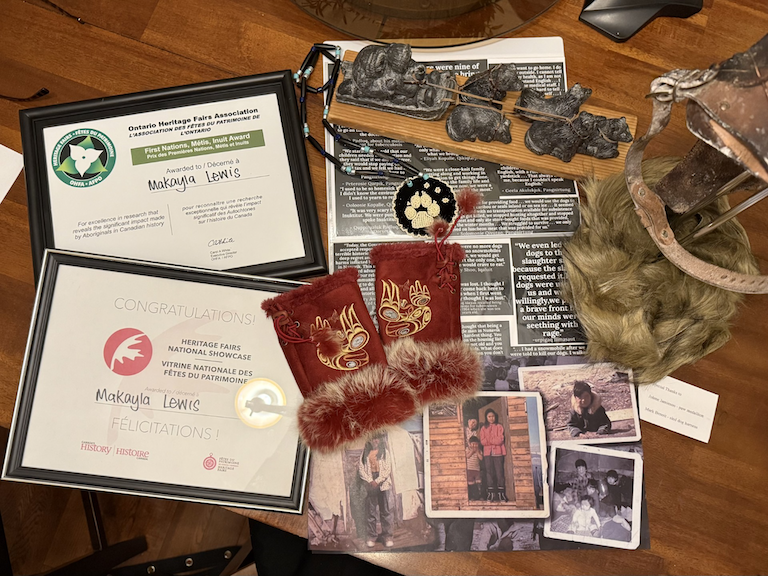
What is the historical significance of your topic?
The historical significance of my topic remains with those who were affected by the massacre: forced into settlements, children sent into schools, and a loss of culture, heritage, and language. Families who relied on their dog sled teams for food and survival were greatly affected. After many inquiries into what took place, the government apologized.
Why did you choose this topic?
I chose this topic for a personal connection, and I like choosing Indigenous topics that are not spoken about much.