Logan S.
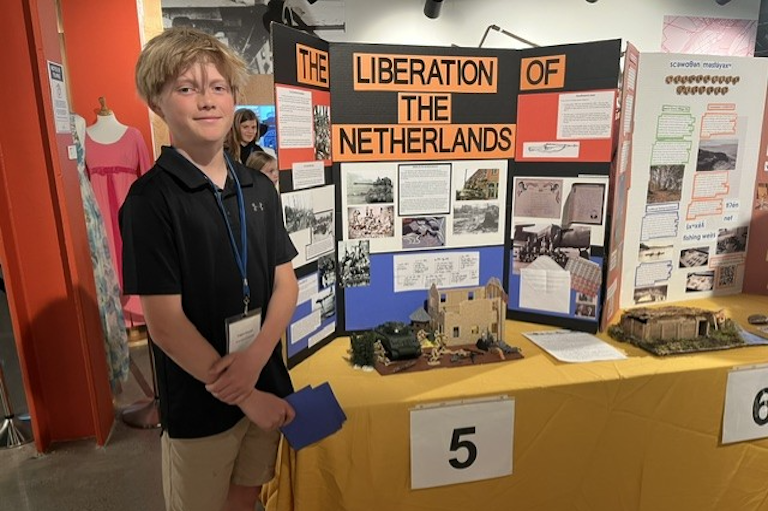
The Liberation of the Netherlands
Logan S.
Delta Heritage Fair
Delta, BC
There were two main attempts to liberate the Netherlands, Operation Market Garden being one of the failed attempts. The second attempt started with the Battle of the Scheldt: A strategic focus to free the Scheldt river and estuary so they could connect the Port of Antwerp to the English Channel. This was key, as it allowed the transport of Canadian troops into the Netherlands.
The Rhineland Campaign, a major Allied offensive across the Rhine River to clear Germans from the west bank of the Rhine (the gateway to Germany) followed next.
Canada was also heavily involved in bringing humanitarian aid to Holland. By April 1945, the Dutch population had resorted to eating tulip bulbs and were suffering from extreme starvation. The Canadian First Army were giving their own rations to the Dutch people until Canada was able to negotiate a truce through occupied areas, allowing food to finally reach the people.
The Rhineland campaign also included the Battle of Hochwald Gap (see next question for details), which was the final and successful push to liberate the people of Holland. To this day, the Netherlands acknowledges Canada’s heroic effort that brought freedom to their country.
What sources and evidence did you consult for your project? What different perspectives did they provide on your topic?
Canada and its Canadian forces were key factors in the outcome of WW2 because of their actions in the Netherlands.
Researching additional sources for my project gave me a new perspective on how a mental goal can gain more strength and momentum when in a group setting. For example The Battle of the Hochwald Gap, a strategic Canadian led tank battle used pure force and mental focus to successfully push the Germans out from their final stronghold in Holland and back into the Germany. It finalized the liberation of the Dutch people. No one Canadian could have done that.
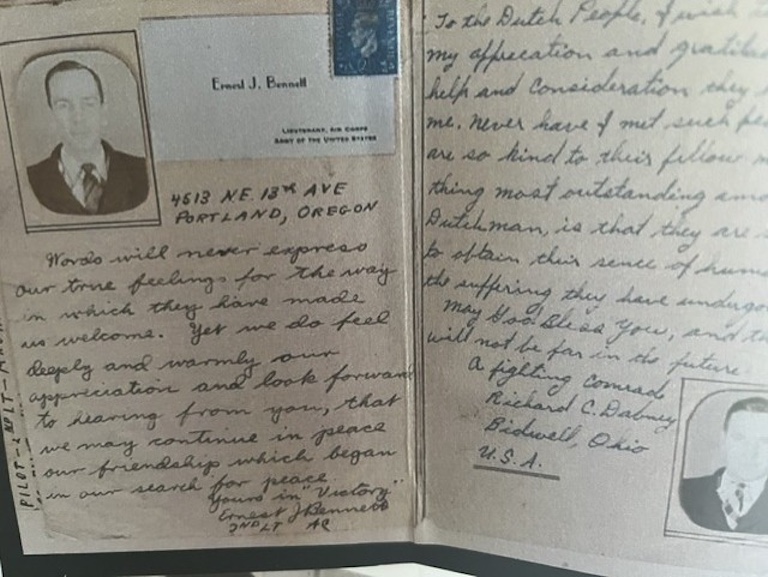
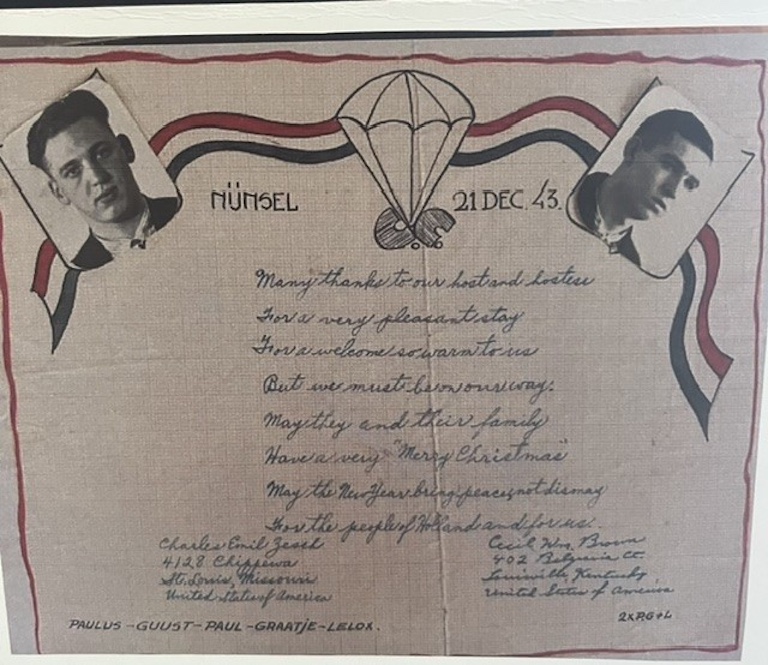
Letters from some of these soldiers, thanking my family for their help.
What is the historical significance of your topic?
The immediate impact of Canada’s presence was the freedom of the Dutch people and the liberation from a German form of tyranny. This impacted Holland in a positive form and Germany in a negative form considering their agenda at that time in history. The long term impact of Canada’s presence was the relationship Canada and the Netherlands developed as a result of the Liberation of Holland. This deep friendship can still be seen today; every year Canada receives 20,000 tulips as a ‘thank you’ and these blooms can be seen in the capital, Ottawa, as a symbol of freedom.
Why did you choose this topic?
My family was heavily affected by this part of Canadian history. Both my great-grand father and my great-grand uncle helped house Allied troops who were bombed out of the air by Germans. It was a dangerous undertaking, helping the soldiers escape. Some stayed on the farm and worked until their wounds healed, or until it was safe to leave.