
Kaiya M.
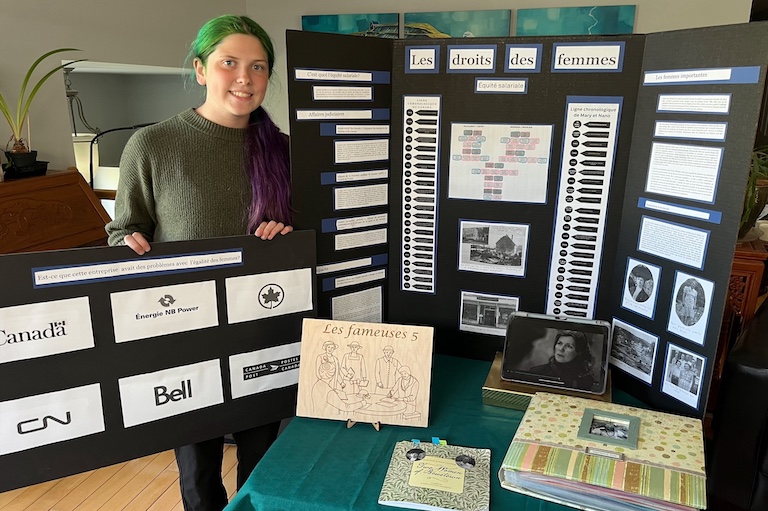
Les droits des femmes : L’équité salariale / Women's rights: Pay equity
Kaiya M.
Anglophone South School District Regional Heritage Fair – Fredericton
Fredericton, NB
My project takes a broad look at pay equity in Canada and how it’s changed throughout the years. It isn’t about one specific event but how with determination, complaints, and small law changes we’ve gotten to where we are now.
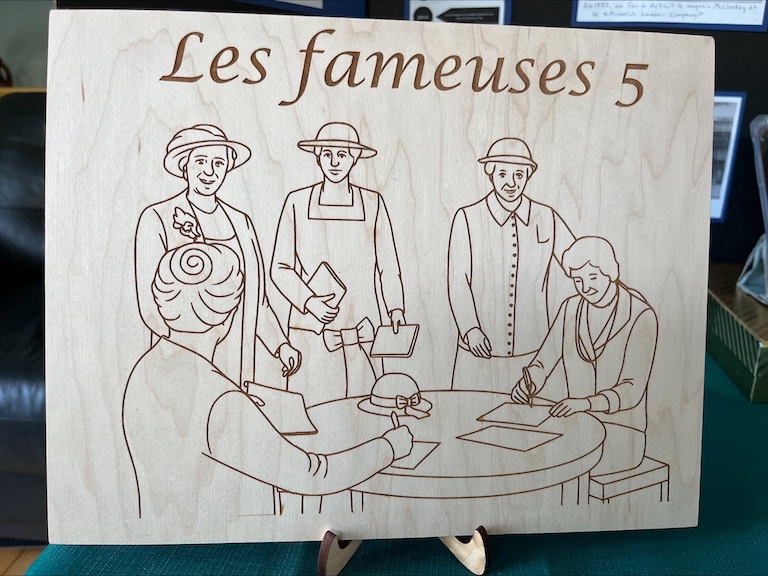
Our first event called Edwards vs. Canada happened in 1929. The event was the Famous 5 (Henrietta Muir Edwards, Nellie McClung, Louise McKinney, Emily Murphy, and Irene Parlby) forced the government to recognize women as people under law.
Then in 1950, the government passed a law saying that any woman who is working the exact same job at the same company as a man should be paid the same. To work around this the companies would change the woman’s job title so that they wouldn’t have to pay them the same.
Next in the 1980s, certain provincial governments created a law that made companies look into their payments disparities instead of waiting for women to make complaints about getting paid less. Currently, women are getting paid 89 cents on the dollar, and are getting offered jobs and promotions less.
To answer my question, pay equity was terrible when my great-grandmother was alive. They were making at most 56 cents on the dollar and despite her writing letters and bringing up to her supervisor that she was getting paid less it didn’t change for 15 years. Now we are still fighting for the opportunity to make the same amount of money and for non-discriminatory hiring and promoting practices. All in all I think we have come a long way and changed a lot of lives, but we need to keep going until we make just as much as men.
What sources and evidence did you consult for your project? What different perspectives did they provide on your topic?
I went over a bunch of news articles, books, and family (only for the stuff about my family). Some of the major online places I visited was Parliament Canada’s website, The Canadian HRReporter, and tandf.com (to find potential court cases to look up). The book I read and family testimonies gave me the perspective of women dealing with the issues while a lot of the news articles gave me the perspectives of both the employers and employees.
What is the historical significance of your topic?
The historical significance of pay equity is that it was used to try to prevent gender-based wage discrimination. The short-term impact was that women got their wages adjusted. The long-term impact of women’s rights and pay equity is that it helped create a societal norm which better positioned protected minority groups to receive the same treatment. This has affected half of the working population by compensating them for the work they’ve done. By paying women fairly we show them that they are respected and valued within the workforce. Changes to laws and societal expectations took place.
Why did you choose this topic?
I chose this topic because as a female who will likely get a job soon I thought it was pertinent. I also remembered my mom telling me stories about my great-grandmother fighting for equal pay and wanted to learn more about the subject as a whole.