
Jayce K.
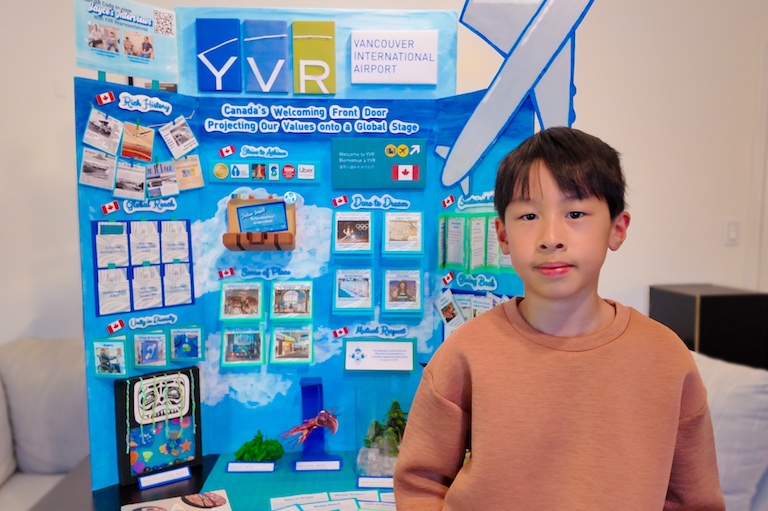
YVR: Canada’s Welcoming Front Door
Jayce K.
Richmond Heritage Fair
Richmond, BC
I have a personal connection to Vancouver International Airport (YVR) because it represents the joy and excitement of travel. I live in Richmond near YVR, and my mom has worked there for over ten years, so the airport has always felt connected to my family and community.
As I researched and interviewed YVR representatives, I discovered that YVR is much more than a place where planes take off and land. It is a symbol of Canadian identity and values. This made me wonder: How does an airport go beyond travel to represent Canada while putting the country’s values into action?
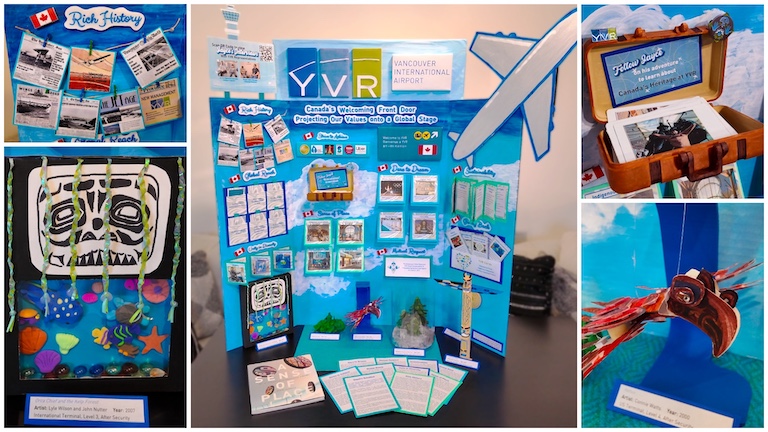
Since opening on Sea Island in 1931, YVR has grown alongside Canada. During the Second World War, it served as a training base for the Royal Canadian Air Force. During major events, such as the 2010 Olympic and Paralympic Winter Games, YVR acted as Canada’s welcoming front door, connecting our country to the world.
But I also learned that this growth had costs. Sea Island was home to farming families who were pushed out as the airport expanded. YVR is also built on the traditional and unceded territory of the Musqueam people, whose connection to the land goes back thousands of years.
Today, YVR works alongside the Musqueam people through the 2017 Sustainability and Friendship Agreement. Since becoming a community-based, not-for-profit organization in 1992, YVR has focused on sustainability, accessibility, innovation, and community support. Its Indigenous art and nature-inspired design honour the land and create a strong sense of place.
I created this project during a time when cooperation and trust between countries are being tested. Canada needs global partners that share values like respect, openness, and responsibility. YVR represents Canadian values in action. It connects Canada to the world by being welcoming, inclusive, innovative and honest about the past.
What sources and evidence did you consult for your project? What different perspectives did they provide on your topic?
I used a variety of primary and secondary sources. My primary sources included interviews with YVR representatives, including an Operations Specialist in Terminal Programs and a Manager of Indigenous Relations. These interviews gave me an inside perspective on how the airport works today and how YVR thinks about passengers, Indigenous relations, and the community.
Through my interview with the Manager of Indigenous Relations, I was very fortunate to be able to learn the perspective of a Musqueam representative. He shared an analogy that really stuck with me. He described YVR and the Musqueam’s 30-year Sustainability and Friendship agreement as “two families that look after this land together”. This creates a strong and enduring connection between the two parties, founded on mutual respect and a shared commitment to a sustainable future that benefits both the airport and the community.
I also used official YVR websites and reports. These helped me find reliable facts about YVR’s history, accessibility programs, Indigenous partnerships, environmental goals, community donations, awards, and future plans. Secondary sources, such as history websites, museum materials, and articles, helped me understand YVR’s past, including Sea Island’s history, wartime aviation, and airport expansion.
The different sources gave different perspectives. Official YVR sources focused more on achievements, innovation, reconciliation, accessibility, and sustainability. Historical sources helped me understand the older story of Sea Island and how the airport developed. Some sources also made me think more deeply about missing voices, especially the Musqueam people and farming families who were displaced. By comparing these perspectives, I learned that history is more complete when we include both achievements and challenges.
What is the historical significance of your topic?
YVR is historically significant because it shows how Canada grew more connected to the world through aviation. In the short term, building the airport gave Vancouver a proper place for air travel and helped the city develop as a transportation hub. During the Second World War, YVR also supported Canada’s wartime efforts through military aviation, training, and work connected to the aircraft industry.
In the long term, YVR became one of Canada’s major international gateways. It helped support tourism, trade, jobs, and global connections. Today, it welcomes millions of passengers, connects many airlines and destinations, and contributes to Canada’s economy. It also helps represent Canada to visitors through its design, Indigenous art, accessibility, and environmental work.
While the development brought many benefits, it also came with difficulties. The airport’s growth in its early years affected people who lived on Sea Island, including farming families who had to move as the airport expanded. YVR is built on the traditional and unceded territory of the Musqueam people, who also faced displacement through colonialism and land loss. This makes YVR important not just as a success story, but as a reminder that progress can come with costs. Today, YVR’s partnership with the Musqueam - built around the four pillars of sustainability: social, economic, environmental, and governance - shows how Canada is working to acknowledge the past and move forward through reconciliation.
Why did you choose this topic?
I chose this topic because I have a personal connection to YVR. I live in Richmond, close to the airport, and my mom has worked at YVR for many years. I have always loved airplanes, travelling, and the feeling of adventure that begins at an airport. Some of my favourite memories are visiting my mom’s office and watching planes take off and land close up.
As I researched more, I realized it was a much deeper topic. YVR is connected to Canada’s history, Indigenous heritage, global connections, environmental goals, accessibility, and community support. It is also often the first impression visitors have of Canada. That made me want to learn how one airport could tell such a big story about our country.
During this time, Canada and the world have faced many challenging changes. Around the globe, values like cooperation, trust, and respect between countries are being tested. Because of this, Canada has been focusing more on working with partners that share similar values, such as fairness, openness, and respect. This connects to YVR because airports are more than just places for travel - they are gateways where countries meet and connect. YVR represents Canada to the world, showing these values by being welcoming, inclusive, and globally connected.