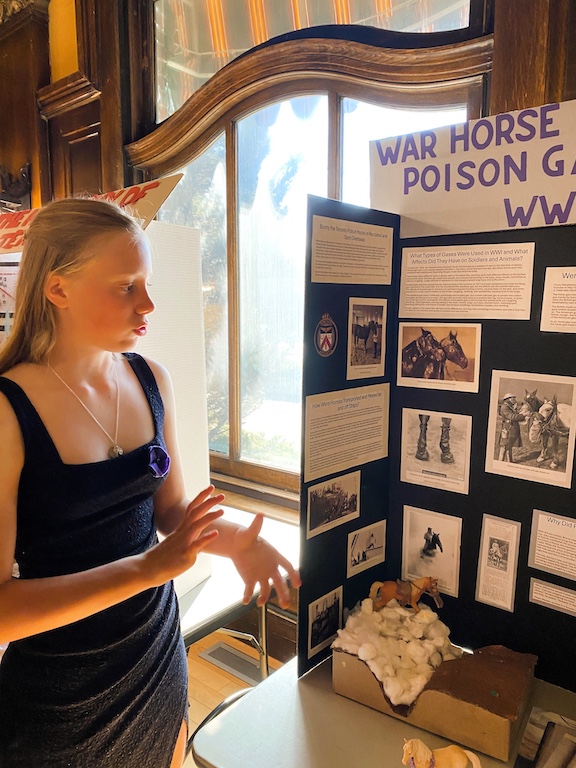
Eva A.
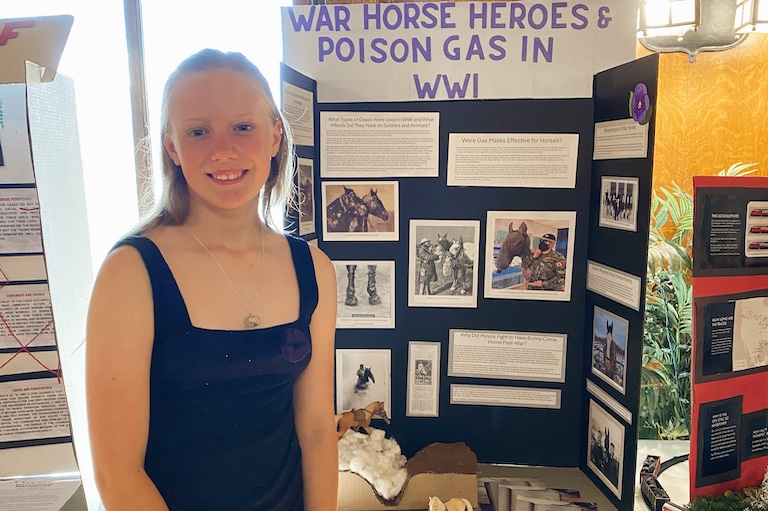
War Horse Heroes & Poison Gas in WWI
Eva A.
East Kootenay Heritage Fair
Cranbrook, BC
At the start of WWI, Bunny, a large chestnut gelding was serving in the Toronto Mounted Police Force with many other horses. When Canada joined the war horses were needed. Eighteen horses were picked from the Toronto Mounted Unit to go overseas – Bunny was one of them. On April 22, 1914, Bunny was on the front lines when Germany released the first-ever chlorine gas attack onto the battlefield. Everyone was terrified. After the attack, the allied forces thought Germany could win the war with this new weapon. When the first gas mask for soldiers was developed, the odds looked better, especially once masks were adapted for horses. Later in the war, Bunny's owner and rider, Bud Dundas, was killed in action. In his brother's memory, Thomas Dundas took over ownership of Bunny, and the two finished the war together. When WWI ended, Bunny was the only one of the original 18 Toronto Police horses that was still alive! News of Bunny's survival soon reached Toronto, and the people of the city wanted to bring this amazing animal home. The city began working on a plan to bring Bunny home. However, the Quarter Master General had decided that only horses owned by high-ranking officers would be shipped home, while all others were sold to the Belgium Government for 40 pounds (about $740 today). Sadly, Toronto’s horse hero was not owned by a high-ranking officer, so the amazing horse was sold, and was most likely used for farm work for the rest of his days. This story highlights what I ultimately learned about my inquiry question: horses were protected in WWI by adapting human gas masks to shield them from harm, and they were celebrated as heroes, but many never saw Canada again.
What sources and evidence did you consult for your project? What different perspectives did they provide on your topic?
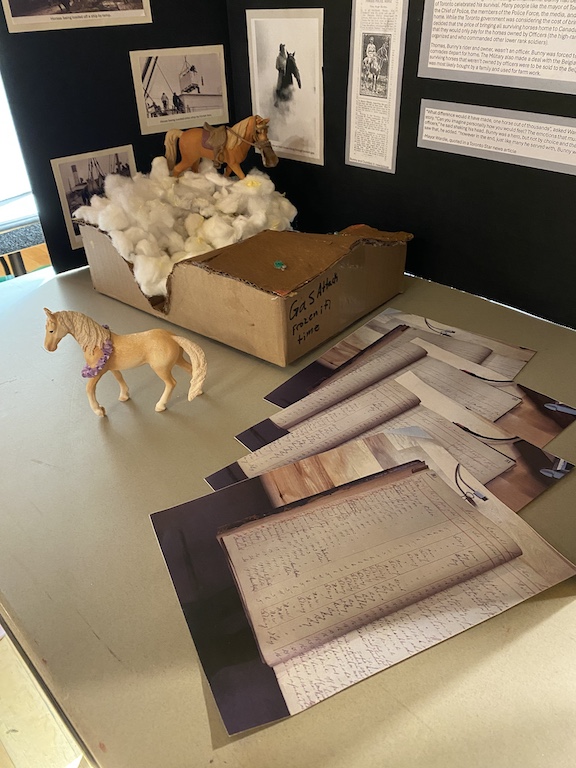
My online research used newspaper articles, historical documents, photo records, and articles from Canadian heritage websites. My mom helped me find and read a peer-reviewed journal article in a history publication. Additionally, I emailed the Toronto Mounted Police Force hoping they would have an answer about Bunny’s breed. Sergent Kristopher McCarty of the Mounted Unit shared with me that they do not know Bunny’s breed, but he was able to share photographs of the old records of purchased horses during the time of WWI. He also told me about Bunny II - a horse that was named after the original Bunny who went to war. I also learned from Sergent McCarty, that the Toronto Mounted Police perform a special ceremony on February 24 each year called “The Day of Remembrance for War Animals”. This day remembers all the animals that have served and continue to serve in the line of duty.
Some sources I found shared words directly from those who served in WWI. For example, one article had the story of a young veterinarian in WWI and included quotes from his journal where he described treating animals during the war. Two other very useful articles were “Untold story of Toronto’s real Canadian war horse” a newspaper article by The Star on Bunny, and “History: Poison Gas” which detailed the types of poison gases used during the war and the harms they caused.
What is the historical significance of your topic?
Today we recognize the significance of war animals, like Bunny and his service to WWI.
Because war animals served in WWI and were protected from harms like poison gas, allied forces were successful in winning the war because horses gave many advantages on the battlefield. WWI was the very first time poison gas had been used for war, and if that hadn’t happened, the technology that we have today to protect horses, other animals, and humans from chemical warfare might not be the same. Many horses and soldiers were affected by WWI. Not only from long-term effects of the gas but also mental and physical injury. Some horses went blind or became lame and became of no use to farmers. Some soldiers needed canes to walk or had PTSD from war. Humans weren’t the only ones to suffer from PTSD; horses, mules, donkeys, and dogs suffered from it as well. PTSD in humans and animals is now better understood and treated because we have learned from those that sacrificed their lives and suffered in serving during WWI.
Why did you choose this topic?
I chose war horses and poison gas in WWI because I love horses. I ride horses myself and I have a personal interest in war and the history of the Great Wars. Knowing that horses were relied upon during WWI, I became very interested in exploring the topic. At first, I hadn't planned on having poison gas as a main focal point, but as I learned more, the focus on poison gas helped me narrow down my topic. I had also become interested in poison gas, since it connected to Bunny's story.