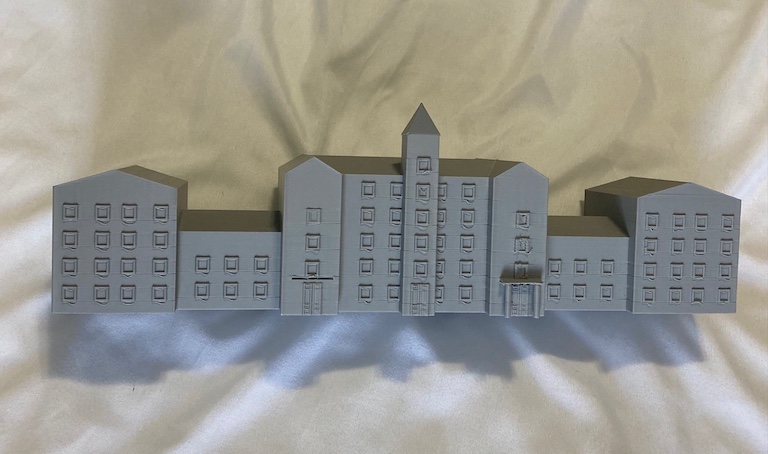
Claire M. and Greer L.-S.
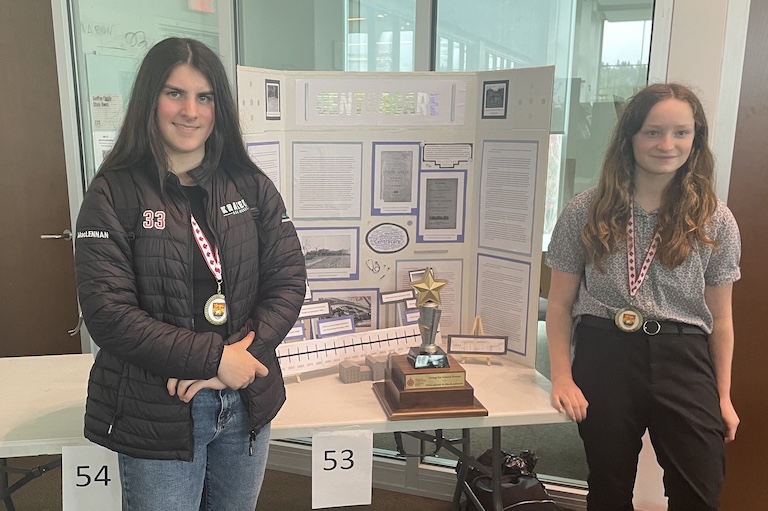
Centracare
Claire M. and Greer L.-S.
Anglophone South School District Regional Heritage Fair – Hampton
Hampton, NB
Centracare first opened in 1848 under the direction of its first director, Dr. George Peters and his hope for a better understanding of people with mental illnesses. Although Centracare was designed to be a safe place for them, there were many health risks in long term stay such as unusual and cruel medical practices (shock treatments, straitjackets, kept under drugs), vermin, understaffing, overcrowding and not enough research to understand why they were different, so a social stigma followed them back in society. After 152 years from being under various directors, slowly modernizing its self, reconstructing the terminology ‘insane’ and officially changing its name from The Provincial Lunatic Asylum to Centracare, it closed in 1998, and was demolished in 1999. It is now Wolastoq Park. Even with Centracare gone and a new center opened with 50 beds, thousands of people with mental illnesses were thrown onto the streets of Saint-John with no money, no treatments and no help from anyone. Centracare is a building forgotten in the grey area of Saint-John’s history, but the only way to stop ourselves from repeating history is learning it.
What sources and evidence did you consult for your project? What different perspectives did they provide on your topic?
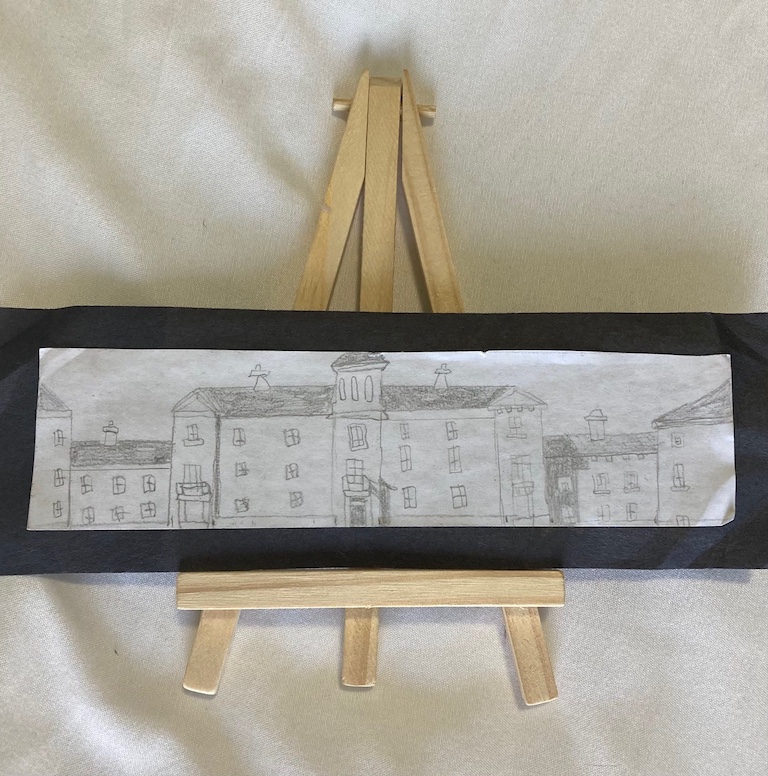
We checked out a diary written by one of the earlier asylum patients, Mary Huestis Pengilly which documented her stay. Her two sons brought her to the asylum without her consent, which was legal. There was a law in place back then saying basically anyone can be committed to the asylum without their consent. Mary wrote about her days, and gave us an idea of the mistreatment in the asylum. We also found a book tilted 50 Years Of Caring by David Goss full of excellent facts and even a floor plan of the asylum that guided our creative project. The directors’ reports were posted in the NB achieves, so when we found them we realized that there was a really harsh difference between that the directors saw and what Mary saw.
What is the historical significance of your topic?
Centracare marked the beginning of studies in mental health and creating more rehab centers. It changed the view of what classified as mental illnesses, like declassifying anxiety, LGBTQ+ and epilepsy. Treatments were researched and improved for each condition, but they mainly turned to therapy. When Centracare closed, we mentioned the patients were thrown out into the streets. Patients were so used to relying on the doctors that they didn’t know how to make the best decisions or how to fend for themselves. This is a massive problem, and Saint-John is suffering from an increasing homelessness rate. Centracare also stopped the cruel labeling of terms like ‘crazy’, ‘insane’ and ‘lunatic.’ And before Centracare, these patients were being put in prisons cells when they really needed help.
Why did you choose this topic?
We chose this topic because we wanted to chose something that had a big impact on New Brunswick, and something that was close to home. Centracare was something the two of us were interested in and we knew we wanted to do something in the medical field.