Autumn T. and Arlynn K.
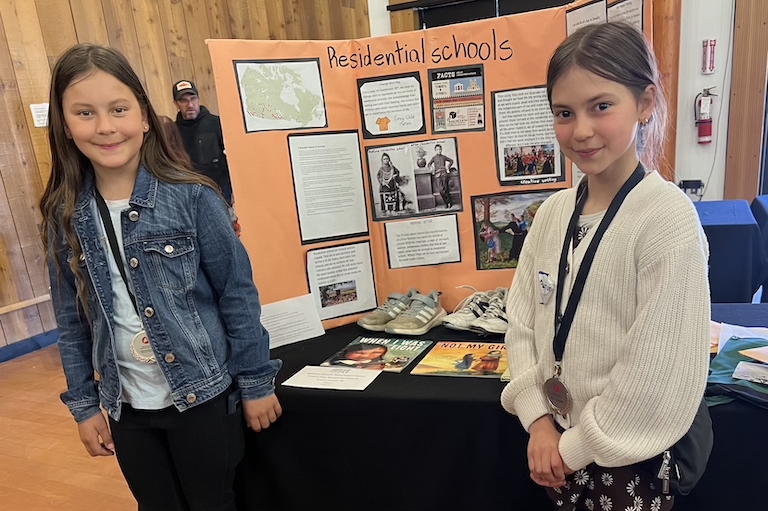
Residential Schools
Autumn T. and Arlynn K.
Yukon/Stikine Heritage Fair
Whitehorse, YT
The key people were the RCMP, the government, and the churches, and Indigenous children. The main events were to assimilate the child and try to take the Indigenous out of the child.
We chose this topic because we are really interested in learning about the history of residential schools. We want more people to understand what happened, because many people still don’t know the history. Most First Nations children in this area would have gone to residential schools. First Nations children deserved better. These were places where the children lived in a school for most of the year. The children were not allowed to leave. These schools were mandatory for First Nations, Inuit and Metis children across Canada. The RCMP would show up in the villages or camps and take the children away from their families.
In Dawson City, for example, they would load the children into the back of a truck and take them to Carcross, Choutla Residential School. There, they would do math, spelling, writing, reading, etc. But mistakes were punished. If a child made a spelling mistake for example, they had to write the word again 100 times. Also, the children were made to do chores. They would be responsible for: chopping firewood, doing dishes, doing the laundry, preparing food, cleaning the dorms, and maintaining the school. The school was divided by genders, so girls were together and boys were together. This meant that even if you had a sibling there, you may not be able to spend time together. Speaking your traditional language was banned and you could be beaten if you were caught. The children were taught that their culture and traditions were wrong and that the school’s way of doing things was right. Experts believe that as many as 6,000 children died while at Residential Schools.
If the children made it home, they were traumatized. Most had been abused, all had been neglected, and the harm caused by taking children away from their families, culture, language, land, and communities had impacted them greatly. A lot of the children felt disconnected from their culture and loved ones. Many families still suffer from the harm experienced at these schools.
What sources and evidence did you consult for your project? What different perspectives did they provide on your topic?
- “Child’s Shoe” was from The Witness Blanket.
- An Interview with Georgette McLeod, a survivor’s daughter.
- Shame and Prejudice: Study for the Removal for Children visual.
- Our Voices Our Stories; Yukon Indian Residential Schools: Truth and Reconciliation - Teacher’s Guide.
- “Finding Our Faces, History through Photographs & Stories,” a book from Whitehorse Aboriginal Women’s Circle.
- The perspective came from people who experienced Residentialschools and their families.
What is the historical significance of your topic?
The children were abused, neglected and hurt. They were removed from their families, their culture and their community. The pain of this hurt still exists in people today. If residential schools didn’t happen, the Indigenous people would still have their language. They would be stronger and more independent. Indigenous people would still be living off the land, and the earth would provide for them.
Why did you choose this topic?
We chose this topic because we are really interested in learning about the history of residential schools. We want more people to understand what happened, because many people still don’t know the history. Most First Nations children in the area would have gone to a residential school. It still affects people today. First Nations children deserved better.