
Akshayaa S.
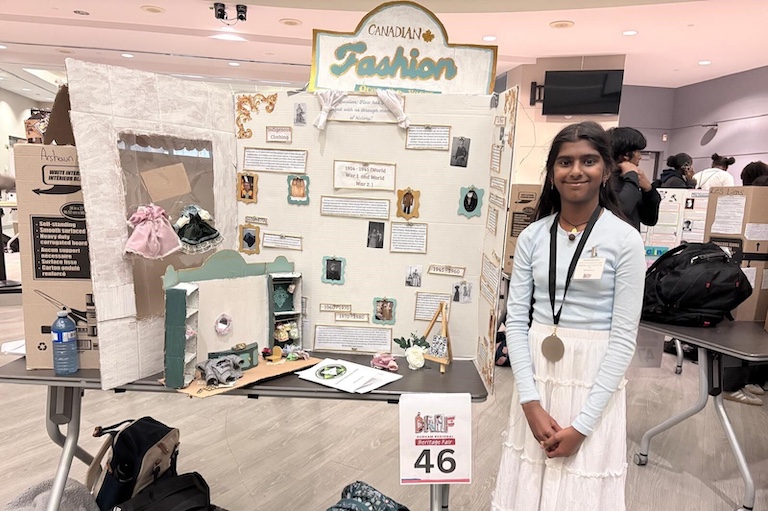
Canadian Fashion Over the Years
Akshayaa S.
Durham Region Heritage Fair
Whitby, ON
My project starts off with Indigenous clothing, which was very practical clothing that was made to keep people warm. It stayed like this until 1600, when the French started colonies in Canada and the fur trade happened. The key trend for the next few years would be beaver fur hats until the Seven Years’ War happened. During this time, people wore Victorian style dresses and suits, influenced by British culture. It remains the same for the next 100 or so years. The next major event that helped shape Canadian fashion was World War 1 and World War 2. During this time, most men were overseas fighting, while women had to take over the jobs that only men were allowed to do. Women were now police officers, workers in factories and even firefighters. Women’s clothing now included rising hemlines, trousers and collared shirts and dresses. The next few years were significantly impacted by designer brands as before this all women knew how to sew, but now since women are in the workforce, there was a heavy dependence on clothing stores. A remarkable brand was Dior as their New Look outfit had made a great hit. A few years later, children and teenage fashion took a turn as teenagers had adopted the plaid and jeans look. This is when US enterprises had made an impact in Canadian fashion as denim was a material that was hugely exported from the US. Before this, jeans had been considered as material for the poor. For children, this was a time when TV characters had a big influence so their clothing had sparkly characters on them. Before this period, children and teenage clothing were replicas of adult clothing.
What sources and evidence did you consult for your project? What different perspectives did they provide on your topic?
I consulted reliable sources such as Canadian Encyclopedia, CBC News, a few newsletter articles about fashion and a few art magazines where I found some old Canadian paintings or people that I can use to reflect on what they wore during that time. I also used Government of Canada websites.
These sources provided the perspectives of people who created the clothes, people who made the materials and were impacted by the industry, as well as local consumers who would buy these clothes or make their own clothing.
What is the historical significance of your topic?
Fashion is something that everyone is in, and it impacts society in multiple ways. Sometimes it was used as a way to ask for rights. An example of this would be when two women wore shorts in Toronto for the first time in 1937 to ask for equal rights between men and women. During World War 1, women wore dresses for the most part, but in World War 2, the rising hemlines and trousers that appeared in women’s clothing had become more common as women' s rights were advancing. Fast fashion was also acknowledged in my project as people choose cheaper over quality. It was due to these reasons that the Hudson’s Bay company had to close down. In my opinion, this company should have been made into a museum or been funded with enough money to keep a store open and continue its 355 year old legacy. This also reflected on the fact that women were in the workforce more because they wore things that they chose to wear. In the present, we came back to practical clothing.
Why did you choose this topic?
I chose this topic because I can cover multiple moments in Canadian history. It let me touch base on many events whether good or bad in the history of Canada. A few examples would be that I got to talk about Indigenous lifestyle, both WW1, and WW2. I also got to mention the influence of the British Empire and Confederation. This topic allowed me to touch on moments not just related to fashion, but many other moments of history.