Your history. Your inbox.
7 uniquely curated newsletters to choose from.


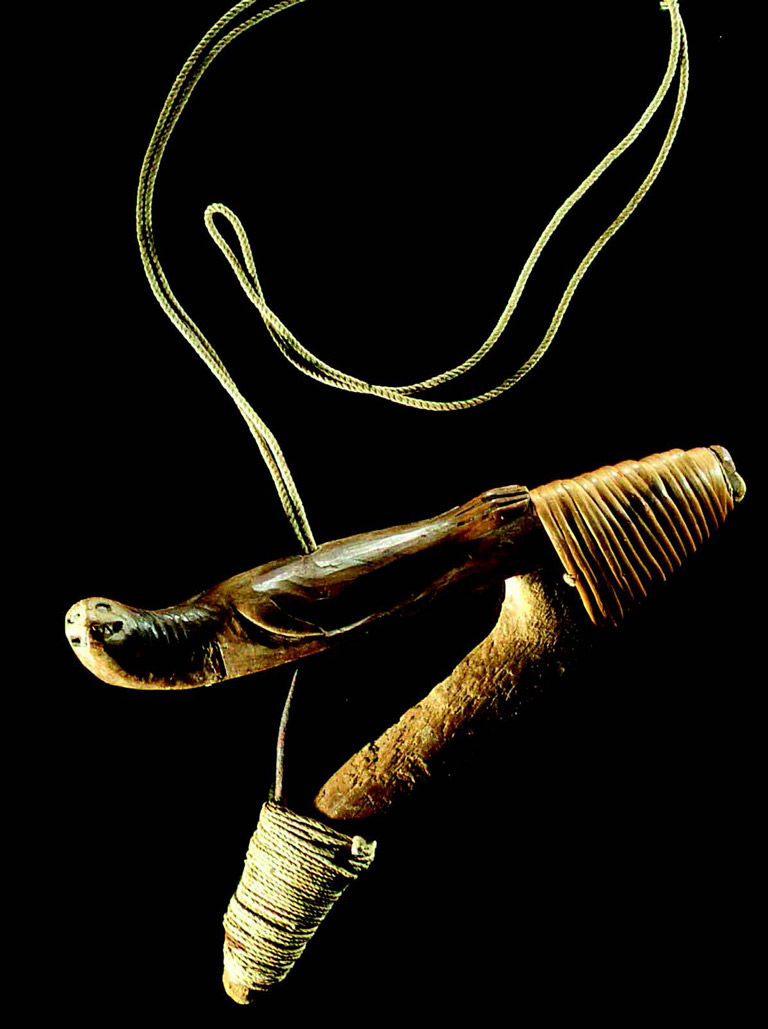
The Tsimshian, who lived along the northern coast of British Columbia, caught halibut by setting large V-shaped hooks on the bottom of fishing banks. Usually, the hooks were made of wood, bone, and spruce root. A fisherman would lash a barb to one arm of the hook and traditionally carved a “spirit helper” into the other arm to provide supernatural assistance. This example has twine threaded through the centre of what looks like a sea lion.
Advertisement